By Dr. Daniel Kotei (Founder & CEO, Faryond LTD)
Across Africa, healthcare projects continue to attract significant investment from governments, international donors, and development partners seeking to improve access to quality medical services. New hospitals, laboratories, and treatment facilities are equipped with modern technologies intended to strengthen health systems and save lives.
However, despite these well-intentioned efforts, many healthcare initiatives struggle to remain functional in the long term. A recurring and costly challenge is the failure of medical equipment, often driven by weak maintenance systems, limited technical expertise, delayed access to spare parts, and unresolved warranty issues. As a result, expensive technologies frequently become unusable within a few years, undermining both service delivery and public confidence.
Furthermore, technology-dependent healthcare interventions are particularly vulnerable within African settings where infrastructure constraints, such as unstable power supply and fragile supply chains, are common. Diagnostic machines, laboratory systems, oxygen plants, and critical care equipment are especially affected.
When these technologies fail, healthcare workers are forced to revert to manual processes or suspend services altogether, directly impacting patient outcomes. In many cases, the root cause is not the quality of the equipment itself, but the absence of reliable post-installation support once manufacturers withdraw after delivery.
Moreover, reliance on overseas manufacturers for technical assistance has proven largely ineffective. Geographic distance, slow response times, and limited understanding of local operating conditions often lead to prolonged equipment downtime. Communication gaps between hospitals and foreign suppliers further complicate warranty claims and repair processes. These challenges highlight a structural weakness in how healthcare technologies are deployed and supported across the continent.
In this context, Original Equipment Manufacturer (OEM) representatives have emerged as a critical yet often underappreciated solution. OEM representatives are local or regional entities officially authorised to act on behalf of manufacturers, providing installation, maintenance, repairs, training, and technical advisory services. Their presence bridges the gap between global technology providers and local healthcare facilities, ensuring that equipment is supported throughout its operational life rather than only at the point of delivery.
Furthermore, OEM representatives play a vital role in reducing technical and operational risks associated with healthcare projects. Their proximity allows them to respond quickly to equipment failures, minimising downtime and preventing prolonged service disruptions. Preventive maintenance programs led by local representatives significantly reduce the likelihood of major breakdowns and help extend the lifespan of medical devices. Importantly, their familiarity with local environmental conditions, such as heat, dust, humidity, usage intensity, and power fluctuations, enables them to adapt manufacturer guidelines to real-world African settings. This localised risk management is particularly crucial in healthcare environments where equipment failure can have immediate and life-threatening consequences.
In addition, access to spare parts remains one of the most persistent challenges facing healthcare facilities. Without local availability, even minor faults can render equipment unusable for extended periods. OEM representatives address this problem by maintaining local inventories or establishing efficient supply channels that significantly shorten repair timelines. Moreover, they manage warranty claims directly, facilitating inspections, approvals, and replacements without the delays commonly associated with overseas correspondence. This not only protects donor and government investments but also ensures continuity of care for patients.
Capacity building further strengthens the contribution of OEM representatives to healthcare sustainability. Sustainable health systems rely not only on equipment but also on skilled personnel capable of operating and maintaining it. OEM representatives provide ongoing training for clinicians, biomedical engineers, and technicians, covering proper usage, routine maintenance, and basic troubleshooting. Unlike one-time training sessions often delivered during project commissioning, local representatives offer continuous skills transfer, reinforcing knowledge and adapting to staff turnover and evolving needs. Consequently, dependence on foreign technical teams is reduced, and institutional ownership of healthcare technologies is strengthened.
Moreover, OEM representatives ease the operational burden on foreign manufacturers by serving as culturally and contextually informed intermediaries. Their understanding of local languages, regulatory requirements, and healthcare practices improves communication and trust between all stakeholders. This localisation allows manufacturers to scale their presence in Africa without compromising service quality, while also supporting longer-term partnerships rather than short-term, transaction-based engagements.
From a financing perspective, the presence of strong OEM representation aligns closely with donor and government priorities. Donors increasingly emphasise sustainability, value for money, and measurable impact, all of which depend on equipment remaining functional over time. Effective OEM support safeguards these investments by extending equipment lifespan and maximising utilisation. At the national level, it reduces replacement costs, improves budgeting predictability, and contributes to broader health system strengthening.
Experience across multiple healthcare projects suggests a consistent pattern: initiatives with active OEM representation demonstrate higher levels of sustainability than those without. They experience faster resolution of warranty claims, greater availability of spare parts, reduced frequency and duration of equipment downtime, and better-trained staff. While factors such as national regulations, donor procurement policies, facility management capacity, and infrastructure reliability influence outcomes, the positive role of OEM representation remains evident.
Ultimately, if healthcare investments in Africa are to achieve lasting impact, OEM representation must be recognised as a core component of project design rather than an optional add-on. Policymakers, donors, and project implementers should integrate local OEM support into planning, procurement, and implementation frameworks. By doing so, they can help ensure that medical technologies continue to serve patients long after funding cycles end, transforming healthcare projects from short-lived interventions into sustainable pillars of health system development.
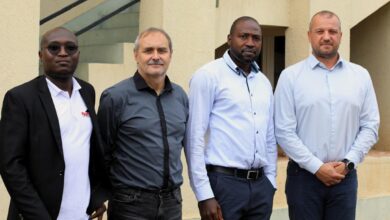
Photo: Dr. Daniel Kotei (Founder & CEO, Faryond LTD)
www. delreport.com